What Does 325 Mean on Jewelry? [What You Need To Know)
If you spot a “325” stamp on your jewelry, it is likely not a standard gold hallmark. While it might look like a karat designation, it is often a manufacturer’s code or a sign of lower-quality base metal plating. Always check for official purity stamps to understand the true value of your pieces.
Have you ever spent a quiet afternoon cleaning out your jewelry box, only to find a mysterious ring or pendant with a tiny inscription? You pull out a magnifying glass, squinting to read the markings, and see the number “325” stamped neatly on the inside of the band. Your heart might skip a beat, wondering if you have stumbled upon a hidden treasure. In the world of precious metals, these little numbers are like a secret code, but they can be incredibly confusing if you do not know how to read them.
As we move into 2026, the jewelry market has seen a surge in vintage finds, online estate sales, and artisan creations. This means more of us are encountering unique stamps that do not always match the standard “14K” or “18K” marks we see in high-end stores. If you are scratching your head asking, “What does 325 mean on jewelry?” you are certainly not alone. Let us dive deep into the world of hallmarks to decode what this specific stamp really represents for your collection.
Key Takeaways
- Not a Gold Purity Mark: Unlike 375 (9k) or 585 (14k), the number 325 does not represent a standard gold purity level recognized in international jewelry markets.
- Manufacturer Codes: Many times, 325 is simply a jeweler’s reference number, a batch code, or a specific design identification rather than a metal composition indicator.
- Potential Plating: If a piece is stamped 325, it is frequently found on costume jewelry or gold-plated items that are made of brass or copper underneath.
- Check for Consistency: Always look for other stamps nearby, such as “GF” (gold-filled), “GP” (gold-plated), or “925” (sterling silver) to provide context for the 325 mark.
- Seek Professional Appraisal: Because 325 is ambiguous, the only way to be 100 percent sure of your jewelry’s content is to have it tested by a reputable jeweler using an acid test or an XRF machine.
The Mystery of Jewelry Hallmarks
To understand what 325 means, we first need to understand how the jewelry industry marks items. A hallmark is essentially a passport for your metal. It tells you who made it, where it was made, and, most importantly, what it is made of. In the United States and Europe, there are very specific standards for gold, silver, and platinum.
Understanding Gold Purity
Gold is naturally very soft, so it is almost always mixed with other metals to make it durable enough to wear. When you see a number like 375, that refers to 9-karat gold (37.5 percent pure). Similarly, 585 is 14-karat gold (58.5 percent pure). These numbers correspond to the decimal percentage of gold in the alloy. When you look at 325, it does not fit into any traditional karat gold standard. It is not 8k, it is not 9k, and it is certainly not pure.
Distinguishing Purity from Style Codes
It is important to remember that not every number stamped on a piece of jewelry is a purity mark. Manufacturers often stamp internal codes on their work. These codes help them track production runs, identify the designer, or verify the date of manufacture. If you find a “325” mark, it is highly probable that it is a internal manufacturer identifier rather than a statement about the gold content.
Is 325 Ever Real Gold?
The short answer is almost certainly no. If a piece of jewelry is genuine solid gold, it will almost always bear a recognizable hallmark that is internationally accepted. Common marks include 10K, 14K, 18K, or their decimal counterparts like 417, 585, or 750. A “325” stamp is not used by reputable refiners to denote gold content.
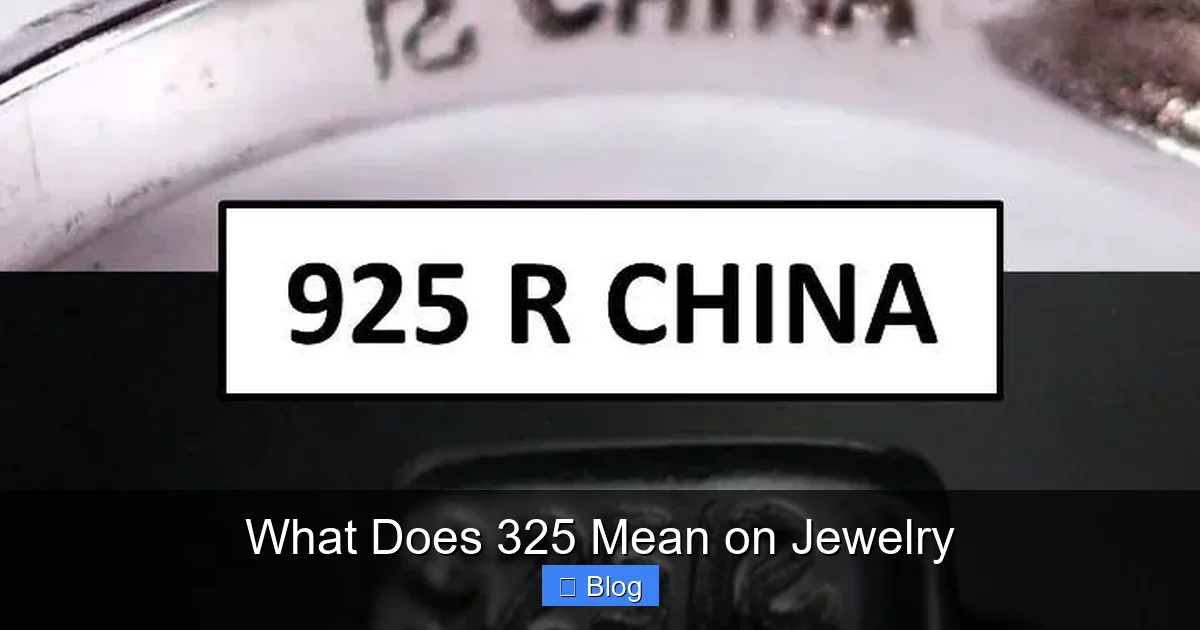
Visual guide about What Does 325 Mean on Jewelry
Image source: luxuria.diamonds
The Danger of “Close Enough” Numbers
Sometimes, consumers mistake 325 for 925. This is a very common point of confusion. The “925” mark is the hallmark for sterling silver, meaning the item is 92.5 percent pure silver. If you are looking at a stamp that is slightly worn down or poorly struck, a “9” can easily look like a “3.” If you suspect your jewelry is silver, try testing it with a magnet—silver is not magnetic, so if your jewelry sticks to a magnet, it is definitely not high-quality silver.
Base Metals and Plating
If you see 325 on a piece of costume jewelry, it is likely a decorative piece made from brass, copper, or nickel-based alloys. These items are often gold-plated or gold-toned to look expensive. When a company mass-produces costume jewelry, they often use their own internal numbering system. In this context, 325 could simply be the style number for that specific design in their catalog.
How to Identify Your Jewelry
Since the 325 mark is not an official standard, you should take a few extra steps to confirm what you are holding. You do not need to be a professional gemologist to perform some basic “home detective work” on your accessories.
Examine the Quality of the Stamp
Look at the quality of the engraving. Are the numbers sharp and deep, or do they look like they were lightly laser-etched? Fine jewelry makers usually use a precision stamp that is clean and professional. If the numbers look blurry or misaligned, it is a strong indicator that the piece is lower-cost costume jewelry. High-end pieces will also have consistent markings throughout; for example, a necklace might have the mark on the clasp as well as the pendant.
Look for Accompanying Marks
Always check for other letters near the 325. If you see “GP,” that stands for “Gold Plated.” “GF” means “Gold Filled.” If you see “GEP,” it means “Gold Electroplated.” These are the most important clues. If you find “325” alongside any of these abbreviations, you have your answer: it is not solid gold, regardless of what the 325 might be trying to signify.
The Impact of Jewelry Trends in 2026
As we navigate the trends of 2026, sustainable jewelry and vintage reselling have become huge. More people are buying jewelry from thrift stores, online marketplaces, and estate sales. Because of this, we are seeing an influx of older, non-standardized jewelry back into the market. This explains why more people are searching for answers about mysterious marks like 325.
The Rise of Estate Jewelry
Estate jewelry is beautiful, but it often lacks the standardized laser markings we see today. Some vintage pieces from specific regions or designers used their own internal coding systems that are no longer in common use. If you have an heirloom piece with a “325” mark, it might be a beautiful vintage item from a small, boutique manufacturer rather than a mass-market brand.
Shopping Smart Online
When buying vintage online, never assume a mark means gold unless it is explicitly stated and verified. If a seller lists an item as “gold” but the only mark is “325,” ask for a clear photo of the hallmark and documentation of an acid test. Reputable sellers in 2026 are usually happy to provide this information to ensure transparency.
When Should You Consult a Professional?
If you have a piece of jewelry that you truly suspect is valuable—perhaps it was a gift or an inheritance—do not rely solely on internet research. A “325” mark is just too ambiguous to be treated as a guarantee of quality.
Testing Methods Used by Jewelers
A professional jeweler can use a few different tools to solve the mystery. The most common is an acid test, where they scratch a small amount of the metal onto a stone and apply different acids to see how the metal reacts. For higher-end items, they may use an XRF machine (X-ray fluorescence), which analyzes the chemical composition of the metal instantly without damaging the piece. Both methods will give you a definitive answer.
Is the Jewelry Worth the Test?
Before you pay for an appraisal, consider the piece. If you bought it for five dollars at a garage sale, it is probably not worth the cost of professional testing. However, if the design is intricate, the gemstones look real, or it holds significant sentimental value, taking it to a local shop is well worth the peace of mind.
Conclusion
So, what does 325 mean on jewelry? In the majority of cases, it is a manufacturer’s code or a style identifier rather than an indication of precious metal purity. While it is natural to hope for a hidden gold treasure, 325 simply does not align with the standard hallmarks used for gold or silver in the jewelry industry today.
The best advice for 2026? Keep enjoying your jewelry, but manage your expectations when it comes to mystery stamps. Use a magnet to rule out base metals, look for secondary markings like “GP” or “GF,” and appreciate your jewelry for its beauty and the memories it represents. If you ever feel truly stumped by a piece, a quick visit to a trusted local jeweler is the most reliable way to clear up the mystery once and for all. Your jewelry box is full of stories—now you have the tools to read them correctly.
Frequently Asked Questions
Is jewelry with a 325 stamp worth any money?
Generally, jewelry marked 325 is considered costume or fashion jewelry, which has low resale value. Its worth is usually tied to its design and aesthetic appeal rather than the actual metal content.
Could 325 mean the jewelry is 32.5 percent gold?
No, there is no standardized gold alloy that is 32.5 percent pure. Gold purity is strictly regulated, and standard markings follow recognized intervals like 375 (9k) or 585 (14k).
How can I tell if my 325 jewelry is fake?
You can perform a magnet test; if the jewelry is attracted to a magnet, it is made of base metal and is not silver or gold. If you want a definitive answer, take the item to a professional jeweler for an acid or XRF test.
Is 325 a common stamp on vintage jewelry?
It can appear on older pieces as a manufacturer’s batch or style number. Since older manufacturing standards were less uniform than they are today, these numbers are more common on estate or thrift store finds.
What if my jewelry says 325 and 925 together?
If you see both 325 and 925, the 925 is the likely indicator of sterling silver, while the 325 is almost certainly a designer or manufacturer’s internal inventory code.
Should I clean jewelry stamped 325 with commercial cleaners?
Proceed with caution, as many pieces with these stamps are gold-plated. Harsh chemicals can strip the thin layer of plating, so stick to mild soap, warm water, and a soft cloth to avoid damaging the finish.