What Does 800 Mean on Jewelry? (What you Need To Know)
When you see the number 800 stamped on a piece of jewelry, it almost always indicates that the item is made of silver with a purity level of 80 percent. This mark is a standard hallmark in many European countries, representing a durable alloy often used for vintage silverware, decorative objects, and heirloom trinkets.
Have you ever spent an afternoon cleaning out your jewelry box, only to find a beautiful, vintage-looking ring or bracelet with a tiny “800” stamp hidden on the inside? It is a common mystery that collectors and thrifters encounter quite often. You might be holding a precious heirloom, or perhaps a simple souvenir from a European trip. Understanding what 800 means on jewelry is the first step toward uncovering the history and value of your favorite accessories.
In the world of precious metals, these small numbers are known as hallmarks. They act as a secret language, telling us exactly what a piece is made of and where it came from. When you see 800, you are looking at a specific standard of silver. While it might not be the “sterling” silver you see in big-box stores today, it carries its own unique charm and history that makes it truly special.
Key Takeaways
- Purity Level: The 800 stamp signifies that your jewelry contains 800 parts of pure silver out of 1000, meaning it is 80% silver.
- The Alloy Factor: Because pure silver is very soft, the remaining 20% is typically made of copper or other metals to improve durability.
- European Origins: The 800 mark is historically common in Germany, Italy, and other parts of Europe, rather than the US-standard “sterling” 925.
- Not Sterling Silver: Remember that 800 silver is technically of a lower purity than the 925 sterling silver standard recognized by most modern jewelers.
- Antique Value: Many items marked 800 are vintage or antique, which can add significant historical or sentimental value beyond just the metal content.
- Identification Tips: Always look for companion stamps, such as a crescent moon or crown, which can help verify the specific country of origin.
The Science of Silver Purity
To understand what 800 means on jewelry, we have to talk about how silver is measured. Pure silver, also known as fine silver, is 99.9% pure. While that sounds amazing, it is actually quite problematic for jewelry makers. Pure silver is incredibly soft. If you tried to make a ring out of it, it would bend, scratch, or break the moment you bumped your hand against a doorframe.
Why We Use Alloys
Jewelers discovered long ago that they needed to add other metals to silver to make it stronger. This mixture is called an alloy. By adding a bit of copper or other metals, the silver becomes hard enough to be worn every day. The number 800 refers to the “parts per thousand” system. It means that in every 1000 grams of the material, 800 grams are pure silver, and the remaining 200 grams are other metals.
Comparing 800 to 925
Most of us in the United States and the United Kingdom are used to seeing “925” stamped on our silver. This is known as sterling silver. Sterling silver is 92.5% pure silver. Compared to 800 silver, sterling is slightly purer and tends to be a brighter, whiter color. However, 800 silver has a deeper, slightly warmer tone that many antique lovers prefer. It is a workhorse metal—sturdy, reliable, and perfect for heavy items like ornate trays or chunky jewelry.
The Geography of Hallmarks
Why do we use the number 800 instead of 925? It largely comes down to where the jewelry was made. In the mid-19th and early 20th centuries, different countries adopted different standards for what they considered “acceptable” silver quality.
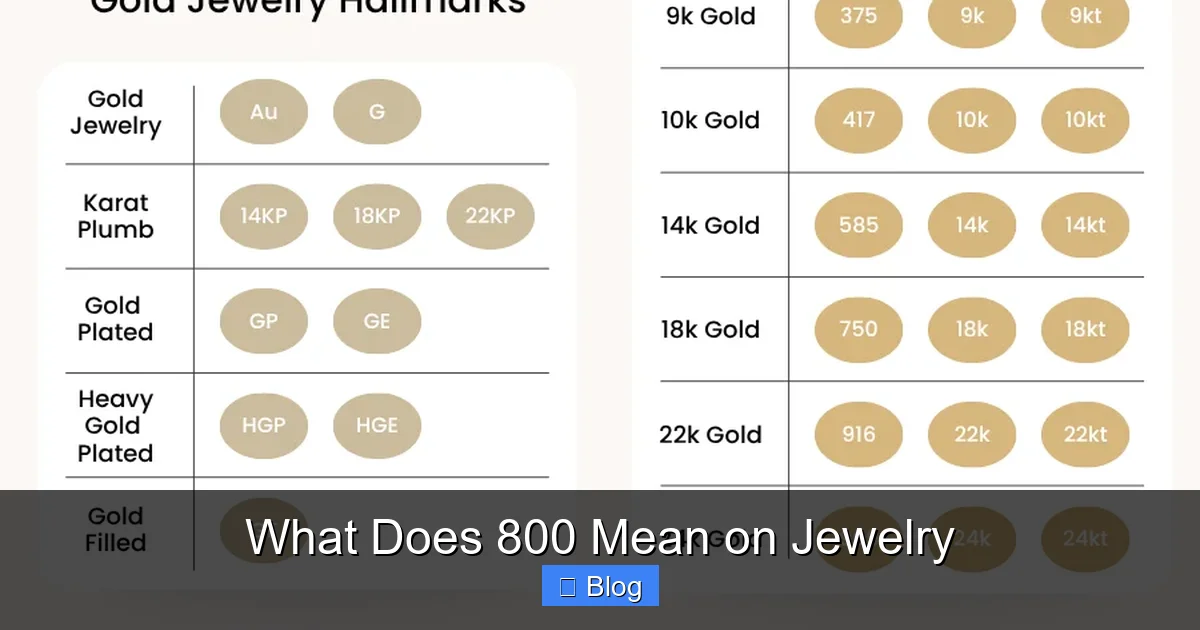
Visual guide about What Does 800 Mean on Jewelry
Image source: zearrow.com
The European Tradition
The 800 stamp is a classic marker of European craftsmanship. If you find a piece with this mark, it was likely manufactured in Germany, Italy, or parts of Austria. In Germany, for example, the 800 standard became a legal requirement for silver objects for many decades. If you see a tiny crescent moon and a crown next to the 800, you are almost certainly looking at a piece of genuine German silver from that era.
Why American and British Standards Differ
In England, the sterling standard of 925 has been the law for centuries. When you travel to these regions, you will rarely see 800 on traditional jewelry because it does not meet their specific “sterling” legal requirements. Understanding the origin helps you realize that an 800 piece isn’t “bad” silver; it is just silver made under a different set of rules.
How to Identify Your Jewelry
Identifying what 800 means on jewelry requires a bit of detective work. Sometimes the stamp is clear and easy to read, and other times it is worn down or hidden under years of tarnish. Grab a magnifying glass and get ready to inspect your treasure.
Looking for Secondary Marks
Beyond the number 800, look for other symbols nearby. These are often the maker’s mark or an assay mark. Assay marks verify that the metal was tested by an official office to ensure it met the 800 standard. If you see a symbol that looks like a small animal, a flower, or a shield, you might be looking at a specific maker’s signature or a regional hallmark.
The Magnet Test
If you aren’t sure if your item is actually silver or just base metal plated with silver, try the magnet test. Pure silver and silver alloys like 800 are not magnetic. Take a strong magnet from your fridge and hold it near the jewelry. If the magnet sticks firmly, the item is likely made of iron or steel with a silver-colored coating. If it doesn’t move at all, that is a great sign that you have a piece of real silver.
Caring for Your 800 Silver
Because 800 silver contains a higher percentage of copper than sterling silver, it can sometimes tarnish a bit differently. It might develop a slightly darker, more golden-toned patina over time. Many collectors actually love this look, but if you want to keep your pieces shiny, there are a few simple tips.
Cleaning at Home
To clean 800 silver, skip the harsh abrasive cleaners. A gentle silver polishing cloth is your best friend. For stubborn tarnish, you can create a gentle paste using baking soda and a drop of water. Gently rub it on with a soft microfiber cloth, rinse it in warm water, and dry it immediately. Never leave your silver wet, as moisture is the enemy of metal longevity.
Storage Tips
When you aren’t wearing your jewelry, store it in an airtight bag or a lined jewelry box. Silver reacts to the oxygen and sulfur in the air, which causes that familiar dark tarnishing. If you keep your pieces away from direct humidity and air, they will stay beautiful for years to come.
Is 800 Silver Valuable?
This is the question everyone asks! Generally speaking, the value of 800 silver is based on its “melt value.” Since it is 80% silver, its value is slightly lower than a piece of 925 sterling silver of the same weight. However, melt value isn’t everything.
The “Antique” Premium
Many 800 silver items are antiques. If your piece is an intricately crafted brooch from 1920s Germany, or a delicate chain from an Italian family workshop, it might be worth far more than the silver it contains. Always consider the craftsmanship, the age, and the designer before you think about selling or melting down a piece.
Checking for Designer Signatures
Sometimes, an 800 mark sits right next to a designer’s name. A quick search online can reveal if that designer is highly sought after by collectors. A piece of 800 silver by a famous European silversmith can be a real find, worth much more than a generic piece of modern jewelry.
The Legacy of Your Jewelry
When you hold a piece of 800 silver, you are holding a piece of history. Whether it was worn by someone at a gala in Vienna or passed down through your grandmother’s jewelry box, these items tell a story. Learning what 800 means on jewelry opens up a world of appreciation for the work and traditions that went into creating it.
It is important to remember that jewelry isn’t just about the purity of the metal—it is about the joy it brings you. Whether it is 800, 925, or something else entirely, if you love how it looks and how it makes you feel, that is the true value. So, keep searching through those vintage shops and family attics; you never know when you might find a hidden piece of 800 silver waiting to tell its story.
In conclusion, the mark 800 is a reliable indicator of European-standard silver. It signifies a durable, high-quality alloy that has stood the test of time. While it differs from the sterling silver standard we see today, it holds its own place in history and beauty. By knowing how to identify, clean, and appreciate your 800 silver, you can ensure that these pieces continue to shine for generations to come.
Frequently Asked Questions
Is 800 silver considered real silver?
Yes, 800 silver is real silver. It consists of 80% pure silver mixed with 20% other metals to provide the strength needed for creating jewelry and decorative items.
Can I wear 800 silver every day?
Absolutely! Because it contains more copper than sterling silver, 800 silver is actually very durable and resistant to the wear and tear of daily use.
Will 800 silver turn my skin green?
It is possible, especially if you have sensitive skin or if the copper in the alloy reacts with your body chemistry. However, this is common with many types of jewelry and usually washes off easily.
How do I tell the difference between 800 silver and silver plate?
Genuine 800 silver will have a hallmark stamp of “800.” If the item is silver-plated, it will usually be stamped with terms like “EPNS” or “Silver Plated” rather than a purity number.
Is 800 silver worth less than 925 silver?
In terms of raw precious metal value, yes, because it contains 12.5% less pure silver than 925 sterling. However, the antique value of a piece often far exceeds the value of the metal itself.
Should I use a professional cleaner for my 800 jewelry?
Unless the item is extremely fragile or set with delicate gemstones, you can safely clean it at home. Use a soft cloth and a gentle, non-abrasive silver polish to maintain its shine.