How To Wear Tight Leggings: Stylish Comfort Tips
Tight leggings are easy to wear when the fit, fabric, top, and shoes work together. In the United States, people commonly wear leggings for workouts, errands, travel, casual offices, and layered winter outfits. Start with leggings that stay opaque when you bend, feel snug without pinching, and match the setting. Then balance the close fit with the right top, undergarments, and footwear.

Choose the Right Fit and Fabric
The best leggings feel like a smooth second layer. They should hold their shape without cutting into your waist, knees, or ankles.
Check these points before you style them:
- Waistband: It should stay flat during movement. It should not roll, dig in, or leave deep marks.
- Seat and hips: The fabric should lie smooth. If it pulls hard across the seat, try a larger size or a different cut.
- Crotch: The gusset or center seam should sit flat. A tight seam can cause rubbing.
- Length: Full-length leggings should reach the ankle. Cropped leggings should stop at a clear point above the ankle.
- Opacity: Bend, squat, and stretch in bright light. The fabric should still cover you.
- Recovery: After stretching, the fabric should return to its shape instead of staying baggy.
- Seams: Flat seams can reduce rubbing during walks, workouts, and long days.
Match the fabric to the task
Different leggings serve different needs.
| Legging type | Best use | What to look for |
|---|---|---|
| Lightweight performance leggings | Running, gym workouts, hot weather | Moisture control, secure waistband, smooth seams |
| Medium-weight stretch leggings | Daily wear, travel, errands | Opaque fabric and good shape recovery |
| Thick brushed leggings | Cold weather and layering | Warmth without excess bulk |
| Ribbed leggings | Casual outfits | A firm knit that does not become transparent |
| Compression leggings | Some sports and long periods of movement | A comfortable level of pressure and easy movement |
| seamless leggings | Low-friction outfits | A secure fit that does not slide or twist |
Compression leggings are not the same as ordinary tight leggings. They apply more pressure and may feel warmer. Use the level that fits the activity and your comfort. If they cause numbness, tingling, pain, skin color changes, or swelling, remove them.
Test leggings before wearing them outside
Try on leggings with the underwear and top you plan to wear. Sit, walk, climb stairs, and bend forward. Look at the front, back, and side in natural light.
A good pair should pass three tests:
- Movement test: The leggings stay in place.
- Coverage test: The fabric remains opaque.
- Comfort test: You can wear them for several minutes without pressure, rubbing, or heat buildup.
Do not rely on a size label alone. Sizes vary by brand and fabric. Your body measurements and the garment’s fit matter more than the number on the tag.

Wear the Right Underwear With Tight Leggings
The best underwear under leggings has smooth edges, a stable fit, and fabric that suits the activity. The goal is comfort and a clean line, not a particular underwear style.
Good options include:
- Laser-cut briefs: These have flat edges that can reduce visible lines.
- Seamless underwear: This works well under smooth, medium-weight leggings.
- Thongs: Some people prefer them under thin leggings, but they are not required.
- High-rise briefs: These can work under high-waisted leggings if the waistband does not bunch.
- Moisture-managing underwear: This may help during workouts or long walks.
Choose underwear that stays in place. If it rolls, bunches, or rubs, it can make tight leggings less comfortable.
For workouts, change out of damp clothing when practical. Warm, wet fabric can increase friction and may irritate sensitive skin. Wash leggings and underwear based on the care label, especially after heavy exercise.
Consider color and fabric weight
Dark leggings can hide underwear lines better than pale leggings, but color alone does not guarantee coverage. White, light gray, and thin pastel leggings often show seams and colors more easily.
For lighter leggings, try:
- Skin-tone underwear that closely matches your own skin color
- Flat seams
- A fabric with enough weight and stretch
- A longer top if you want more coverage
Avoid underwear with thick lace, bulky seams, or decorative edges under very smooth leggings.
Know when discomfort is a warning
Tight clothing can contribute to chafing in areas where fabric and skin rub. You may notice burning, redness, tenderness, or small irritated spots. Stop wearing the item if the irritation worsens.
For repeated or severe irritation, ask a health professional for advice. Seek care sooner for open skin, spreading redness, pus, fever, severe pain, or symptoms that do not improve.

Balance Tight Leggings With the Right Top
A close-fitting bottom does not require an oversized top. The best choice depends on the setting, your desired coverage, and the weight of the leggings.
For casual outfits
Pair leggings with one of these tops:
- An oversized T-shirt
- A long-sleeve crewneck
- A denim jacket over a fitted tee
- A flannel shirt worn open
- A tunic-length sweater
- A cropped sweatshirt with high-rise leggings
A longer top creates a relaxed line. A shorter top shows the waist and works well when the leggings are thick and fully opaque.
For athleisure outfits
Athleisure combines active pieces with casual clothing. Try:
- High-rise leggings with a fitted tank and an open zip jacket
- Black leggings with a sweatshirt and clean sneakers
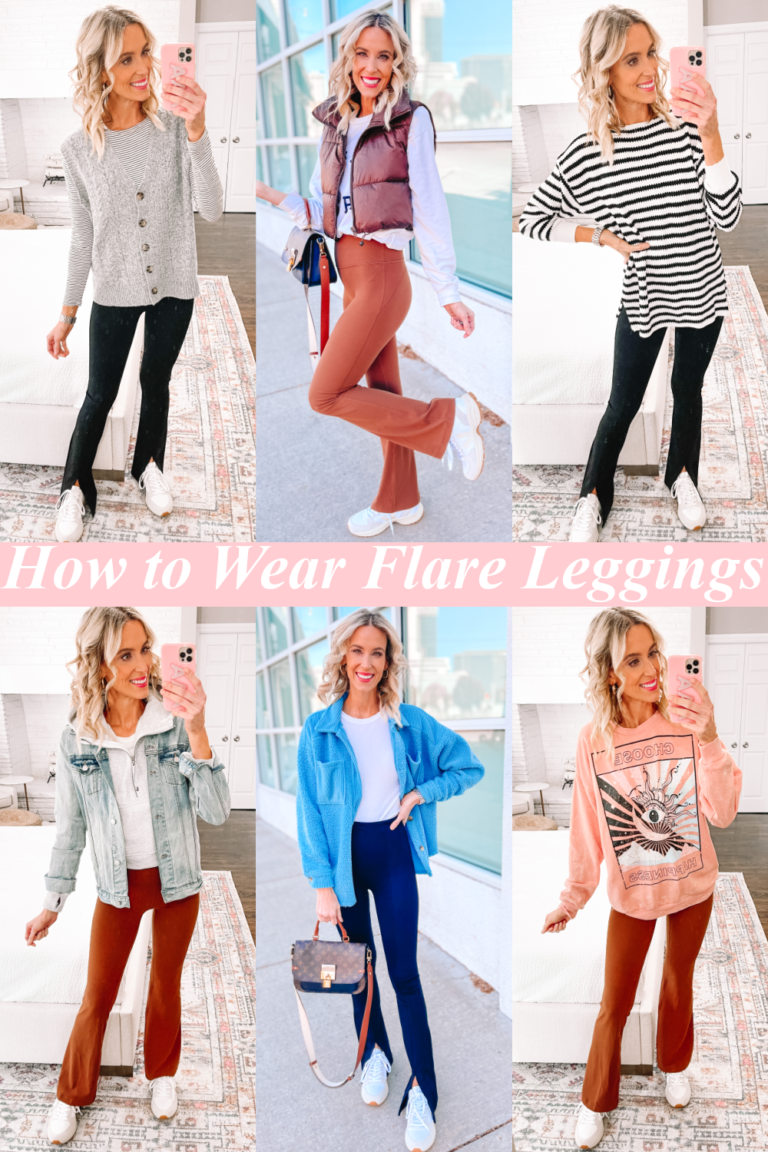
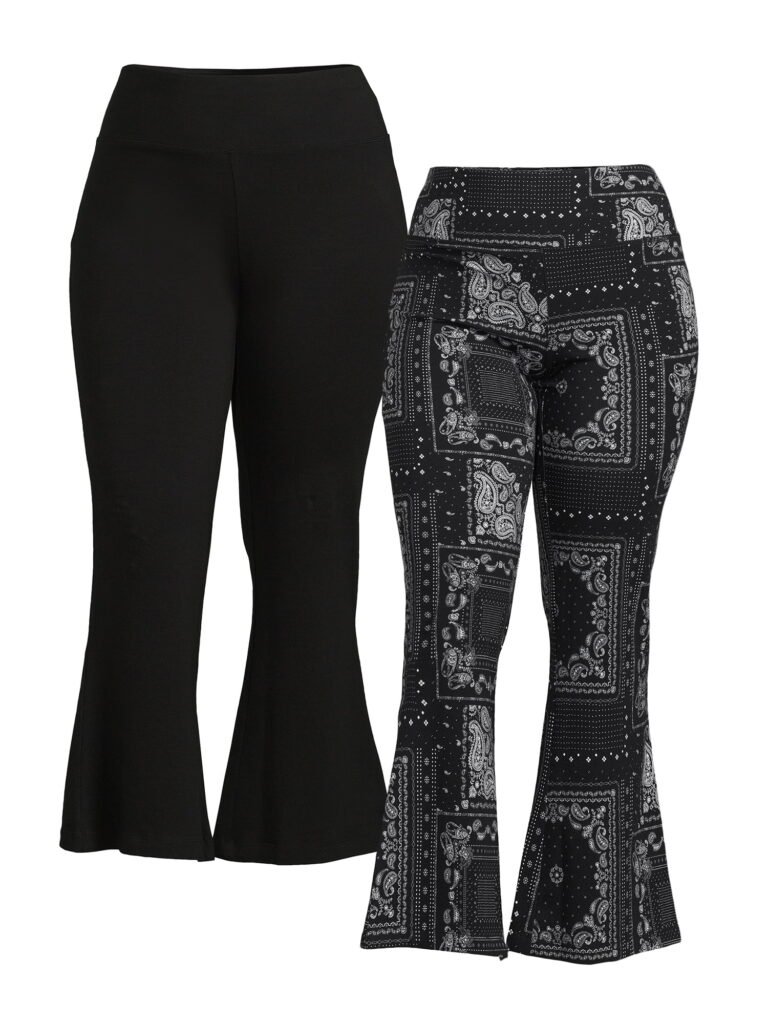
- Flared leggings with a cropped hoodie
- Full-length leggings with a long puffer vest
- Neutral leggings with a bright athletic top
Keep the outfit intentional by repeating one color. For example, black leggings, a gray sweatshirt, and black sneakers create a simple color link.
For work or business-casual settings
Leggings may not fit every workplace dress code. Check your employer’s policy first. If leggings are allowed, make the outfit look structured rather than gym-ready.
Try:
- Thick, opaque leggings
- A long button-up shirt
- A blazer or tailored jacket
- A longer knit top
- Loafers, ankle boots, or polished flats
- Simple jewelry and a structured bag
Avoid workout leggings with shiny panels, mesh cutouts, large logos, or visible drawstrings in a formal office. A ponte knit legging can look more polished because it has a thicker, firmer finish.
For travel
Leggings can work well for flights, road trips, and long train rides. Choose a soft waistband and fabric that does not trap too much heat.
A useful travel outfit includes:
- Opaque leggings
- A breathable T-shirt
- A cardigan, overshirt, or lightweight jacket
- Slip-on sneakers
- A long layer for extra coverage
Avoid leggings that compress your waist enough to cause discomfort when seated. A waistband that feels fine while standing may feel too tight after hours in a chair.
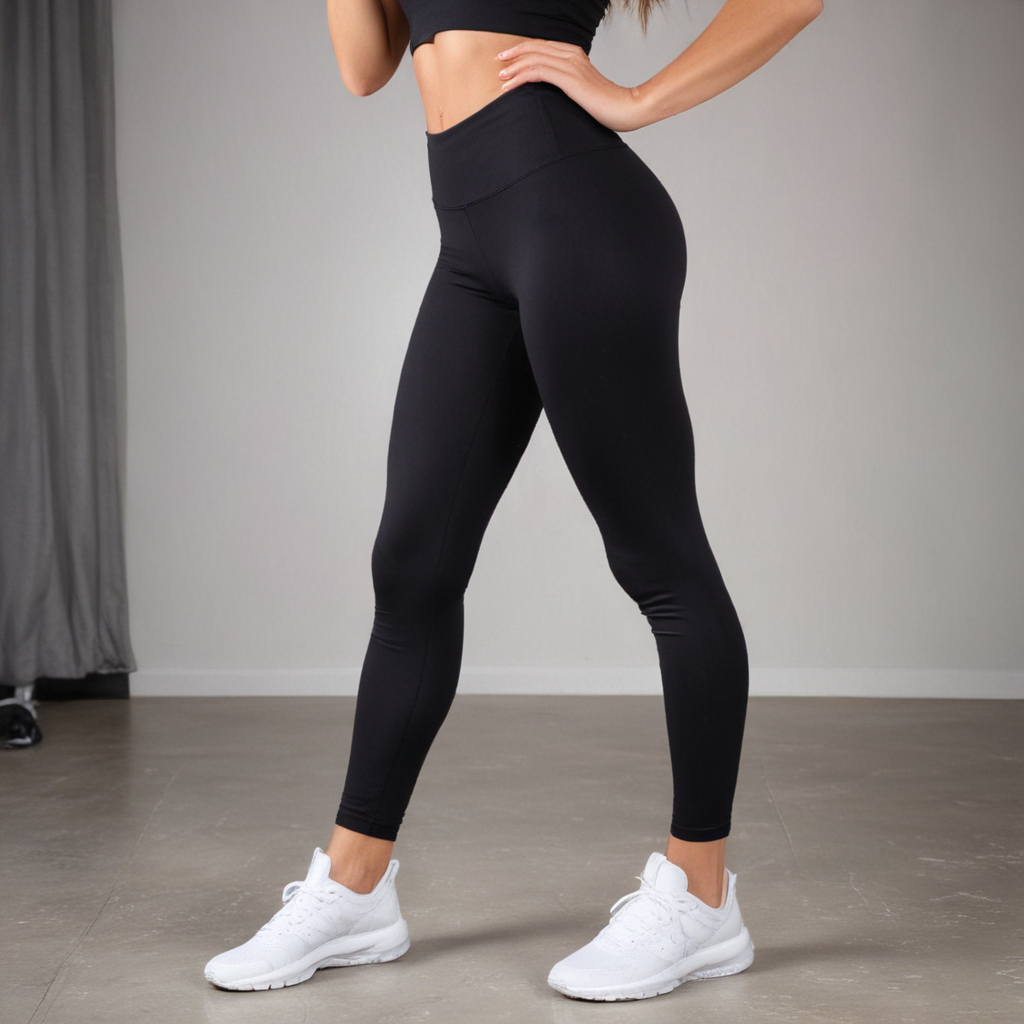
Match Leggings With Shoes and Layers
Shoes change the mood of a leggings outfit more than most accessories. Use the shoe to set the level of formality.
| Shoe | Style effect | Good pairing |
|---|---|---|
| Running shoes | Sporty and casual | Performance leggings and a sweatshirt |
| Low-top sneakers | Clean and everyday | Black leggings and a jacket |
| High-top sneakers | Casual and youthful | Cropped leggings or cuffed layers |
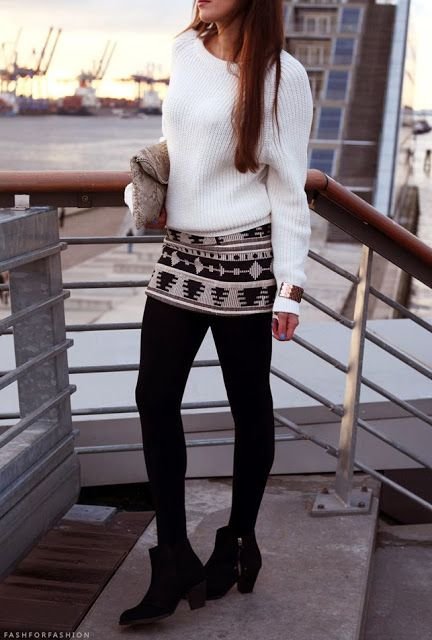
| Ankle boots | Polished and fall-ready | Full-length leggings and a sweater |
| Tall boots | Warm and streamlined | Thick leggings and a long coat |
| Loafers | Smart casual | Ponte leggings and a long blazer |
| Ballet flats | Light and simple | Cropped leggings and a longer top |
| Sandals | Warm-weather casual | Lightweight leggings and a loose shirt |
Wear the right length with each shoe
Full-length leggings usually create the cleanest line with sneakers and boots. Cropped leggings can work with low-cut shoes, but the gap between the hem and shoe should look deliberate.
If the hem stops at the widest part of the calf, the leg can appear visually shortened. Try a hem that ends above the ankle or reaches the ankle instead.
With boots, avoid excess fabric bunching at the ankle. A smooth fit looks more polished and feels better under the boot shaft.
Add layers by season
In spring and fall, wear leggings with:
- A denim jacket
- A utility jacket
- A cardigan
- A lightweight trench coat
- A long overshirt
In winter, choose thicker leggings with:
- A wool or quilted coat
- Tall boots
- A long sweater
- Warm socks that do not bunch
- A scarf or hat
In summer, select lighter fabric and a loose top. Avoid thick leggings in high heat if they make you feel sweaty or uncomfortable.

Use Color, Proportion, and Texture
Simple styling rules can make tight leggings look balanced.
Start with one base color
Black leggings are easy to style because they work with light, dark, and bright tops. Navy, brown, charcoal, and olive can also act as neutral bases.
For a longer visual line, pair leggings with shoes in a similar color. Black leggings and black ankle boots create less contrast at the ankle.
Mix fitted and loose shapes
An outfit with tight leggings and a tight top can look sleek, but it may feel too close-fitting for some settings. Add a loose or structured layer when you want more balance.
Examples:
- Fitted leggings + loose sweatshirt
- Fitted leggings + long button-up
- Fitted leggings + structured blazer
- Flared leggings + fitted tank
- Ribbed leggings + smooth cotton jacket
Texture also adds interest. Combine smooth leggings with denim, wool, cotton, fleece, or leather-like materials.
Use the rise to shape the outfit
High-rise leggings sit at or above the natural waist. They work well with tucked tops, cropped jackets, and long layers.
Mid-rise leggings sit lower and may feel better if you dislike pressure near the ribs. They often pair well with longer shirts.
A waistband should stay in place without requiring repeated pulling. If you keep adjusting it, the rise, size, or waistband design may not suit your body.
Dress up or down with accessories
Small changes can shift the outfit:
- Add a structured handbag for a more polished look.
- Choose simple metal jewelry for a clean casual style.
- Wear a baseball cap for a sporty outfit.
- Use a scarf and boots for a fall look.
- Add a long coat when you want more coverage.
Accessories should support the outfit. They should not hide a poor fit or transparent fabric.
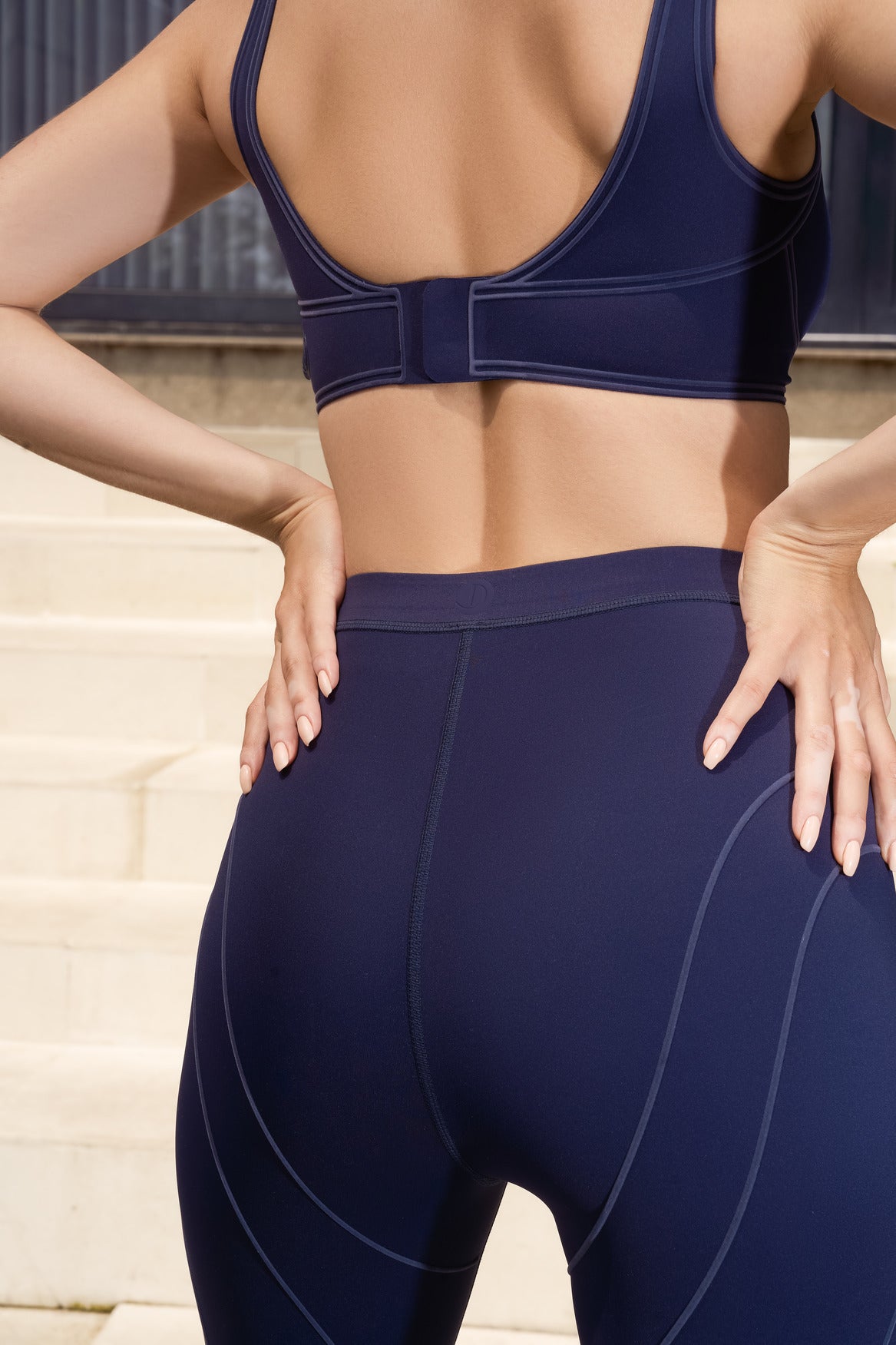
Style Tight Leggings for Common Occasions
The best leggings outfit depends on the activity and the expected dress level.
For the gym
Choose performance leggings that stay secure during squats, lunges, and bending. Look for a waistband that does not roll and fabric that remains opaque under stretch.
Wear them with:
- A supportive sports bra or tank
- A loose training shirt
- Cross-training shoes
- A light jacket for travel to and from the gym
Do not use fashion leggings for demanding workouts unless the fabric and seams can handle the movement.
For walking and errands
Try medium-weight leggings with a long T-shirt, sweatshirt, or casual jacket. Sneakers are usually the simplest match.
If you will spend several hours out, test the waistband while sitting and walking. Comfort matters more than a very sculpted fit.
For casual social events
Use thicker leggings with a knit sweater, long jacket, or button-up shirt. Add ankle boots, loafers, or clean sneakers.
Avoid pairing very thin leggings with a short top if you are unsure about coverage. A longer layer can make the outfit feel more secure and balanced.
For a casual office
Confirm the dress code first. Choose a matte, opaque pair with minimal athletic details. Add a long tailored layer and polished shoes.
If the outfit still looks like workout wear, switch to ponte pants, knit trousers, or straight-leg pants. These options may fit the setting better while keeping a soft feel.
For lounging at home
Soft leggings can be comfortable for home use. Choose a waistband that does not press into your stomach while sitting or resting.
Wash them as directed. Body oils, sweat, and lotion can build up in stretch fabrics over time.

Fix Common Tight-Legging Problems
Small fit problems often have simple causes. Use the symptom to guide the fix.
| Problem | Likely cause | What to try |
|---|---|---|
| Waistband rolls down | Wrong rise, too much tension, or weak waistband | Try a different rise, size, or fabric |
| Leggings slide down | Poor fit, smooth fabric, or excess stretch | Try a smaller size only if the fabric is not already tight; otherwise choose a better waistband |
| Fabric turns sheer | Too much stretch, thin knit, or poor fit | Choose a thicker fabric or size that does not overstretch |
| Crotch wrinkles | Rise or length does not match your body | Try another cut, rise, or gusset |
| Waist digs in | Waistband is too firm or small | Try a softer or wider waistband |
| Knees become baggy | Fabric lacks recovery or leggings are too loose | Choose better stretch recovery or a closer fit |
| Inner thighs rub | Seams, sweat, or repeated friction | Try smooth seams, longer shorts, or an anti-chafing product made for skin |
| Underwear lines show | Thick edges or thin fabric | Use seamless underwear or a longer top |
| Leggings feel hot | Heavy fabric or poor moisture control | Choose lighter fabric and change after exercise |
Do not solve every problem by sizing down. Smaller leggings may increase pressure, transparency, seam strain, and discomfort.
When the fit fails
Return or replace leggings if:
- They remain see-through after you test them.
- The seams strain when you move.
- The waistband causes pain.
- The fabric twists or slides during normal activity.
- The item irritates your skin each time you wear it.
If you develop persistent rash, swelling, pain, numbness, or skin damage, stop wearing the leggings and consult a qualified health professional.

Wash and Store Leggings Correctly
Care affects stretch, color, odor, and fabric life. Always follow the care label because fiber blends differ.
General care often includes:
- Turn leggings inside out.
- Wash them with similar soft items.
- Use cool or warm water as the label permits.
- Avoid harsh bleach unless the label allows it.
- Skip fabric softener when the manufacturer warns it may affect performance fibers.
- Air-dry when possible.
- Avoid high heat, which can damage elastic fibers.
Do not store damp leggings in a gym bag or closed hamper. Let them dry first when you can. Keep leggings away from rough Velcro, sharp zippers, and abrasive surfaces that can cause pilling.
Rotate pairs if you wear leggings often. This gives elastic fibers time to recover and reduces wear on one garment.
Key Takeaways
- Choose leggings that stay opaque during bending and stretching.
- The waistband should stay flat without pain or deep pressure.
- Match the fabric to the task: performance fabric for exercise and thicker fabric for daily outfits.
- Use smooth underwear and test it with the leggings.
- Balance tight leggings with a loose, long, or structured top when you want more coverage.
- Match shoes to the setting, from sneakers for errands to boots or loafers for polished outfits.
- Do not size down to fix slipping or transparency.
- Stop wearing leggings that cause pain, numbness, skin damage, or repeated irritation.
Frequently Asked Questions
Should you wear underwear under tight leggings?
Yes, unless you personally prefer not to and the garment is designed for that use. Choose underwear that feels comfortable, stays in place, and does not create bulky seams. For exercise, moisture-managing underwear may feel more comfortable than heavy cotton.
How can you tell if leggings are too tight?
Leggings may be too tight if they cause pain, numbness, tingling, deep marks, restricted movement, or fabric that turns transparent when stretched. A secure fit should support movement without cutting into the waist or legs.
Can you wear tight leggings to work?
That depends on your workplace dress code. If leggings are allowed, choose an opaque, matte pair and wear them with a longer polished top, blazer, or structured jacket. For more formal workplaces, knit trousers or ponte pants may be a better choice.
What tops look best with tight leggings?
Long T-shirts, tunic sweaters, button-up shirts, denim jackets, blazers, and sweatshirts all work well. A fitted top can also work when the leggings are opaque and the outfit suits the setting. Use a looser or structured layer when you want more balance.
Are tight leggings safe to wear all day?
They are generally comfortable for many people when they fit well and the fabric stays dry. Take them off if they cause pain, skin irritation, numbness, or heat discomfort. Change out of sweaty clothing after exercise when practical.
How do you stop leggings from being see-through?
Choose a fabric with enough weight and stretch, check it in bright light, and perform a squat test before buying. Avoid sizing down, since excess stretch can make fabric more transparent. A longer top can add coverage, but it does not correct a poor-quality or overstretched pair.
Conclusion
The easiest way to wear tight leggings is to treat them as a close-fitting base layer. Start with opacity, comfort, and movement. Then add a top that suits the setting, shoes that match the outfit, and layers that create balance. If the waistband pinches, the fabric becomes sheer, or the seams rub, change the garment instead of forcing the outfit to work.