How To Avoid V Shape In Leggings: Easy Fixes
Introduction
If leggings show a strong V shape at the front in the crotch area, the usual cause is fit, seam design, fabric tension, or underwear choice. This issue is common in the United States, where women’s clothing sizes can vary widely between brands and stores. A medium in one U.S. brand may fit like a small or large in another.
The best fix is to choose leggings with a smooth front panel, a gusset, enough room through the rise, and firm but flexible fabric. You may also need to adjust the size, waistband position, or underwear.
A front V shape is not a body problem. It is usually a clothing-design problem. The goal is comfort, coverage, and a fit that lets you move without pulling at the seams.

What Causes a V Shape in Leggings?
A V shape often appears when fabric pulls toward the center front. The pull can create a visible outline that points down from the lower stomach toward the crotch.
Common causes include:
- A front center seam
- A rise that is too short
- Leggings that are too small
- Thin or very stretchy fabric
- A waistband worn too low
- Seams that sit too close to the body
- Underwear that bunches or presses into the fabric
- A gusset that is too small or poorly placed
The rise is the distance from the crotch seam to the top of the waistband. A short rise gives the fabric less room to cover the front of the body. When you bend, squat, or walk, the fabric may pull into a V shape.
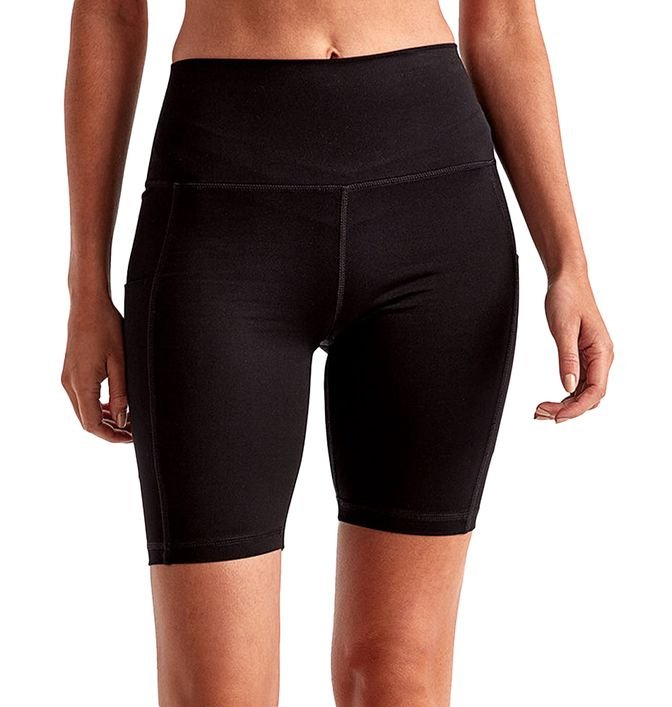
A gusset is a piece of fabric added to the crotch. It may look like a diamond, triangle, or oval panel. A well-placed gusset can reduce pressure on the center seam and give you more room to move.
V shape versus camel toe
People often use “V shape” and “camel toe” to describe the same visible outline. They are related, but the terms are not always used in the same way.
A V shape may be a simple seam outline with no discomfort. A camel toe usually means the fabric presses into the labia and creates a more defined outline. Both can result from the same fit problems, but discomfort is a sign that the leggings need adjustment.
Choose Leggings Without a Front Center Seam
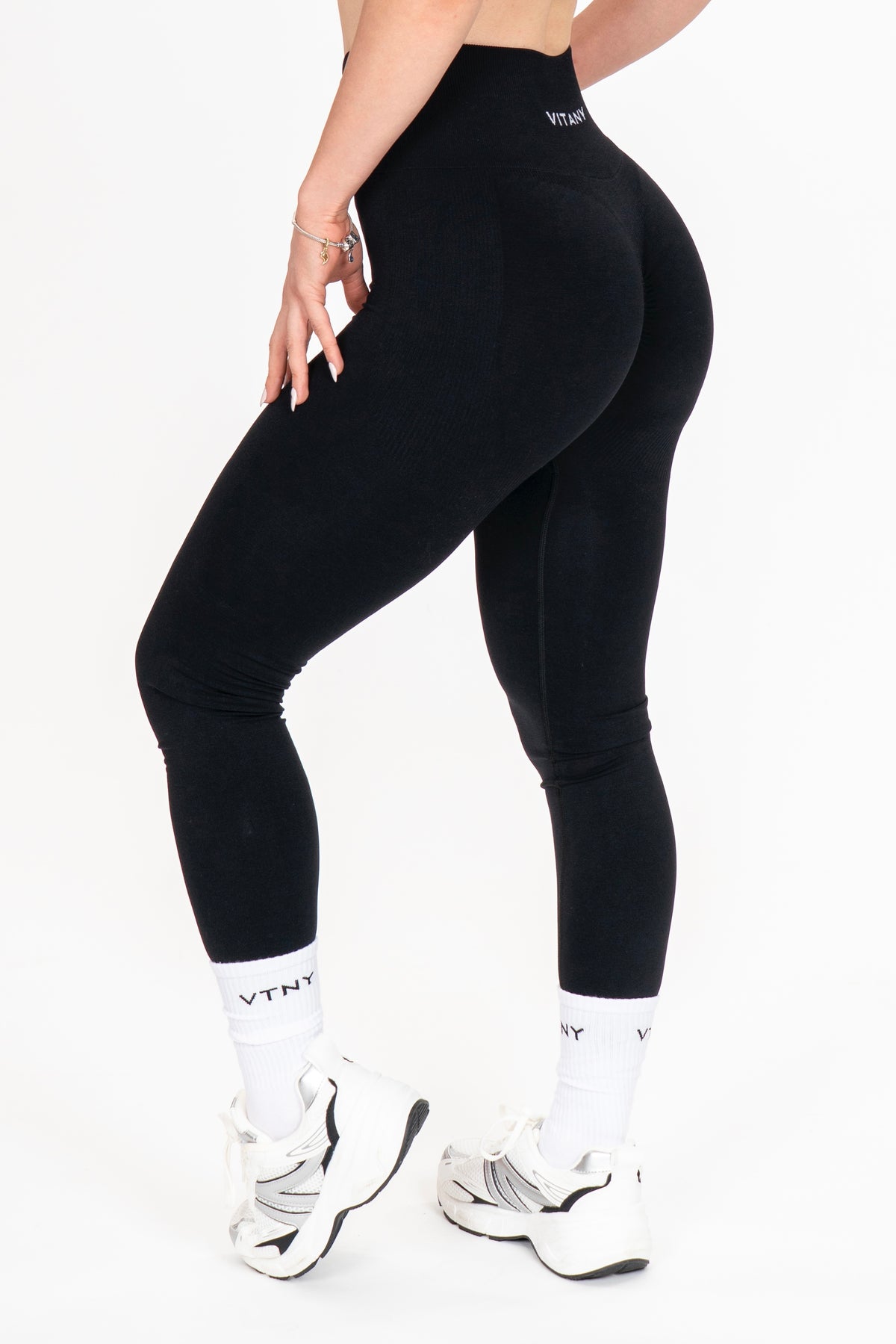
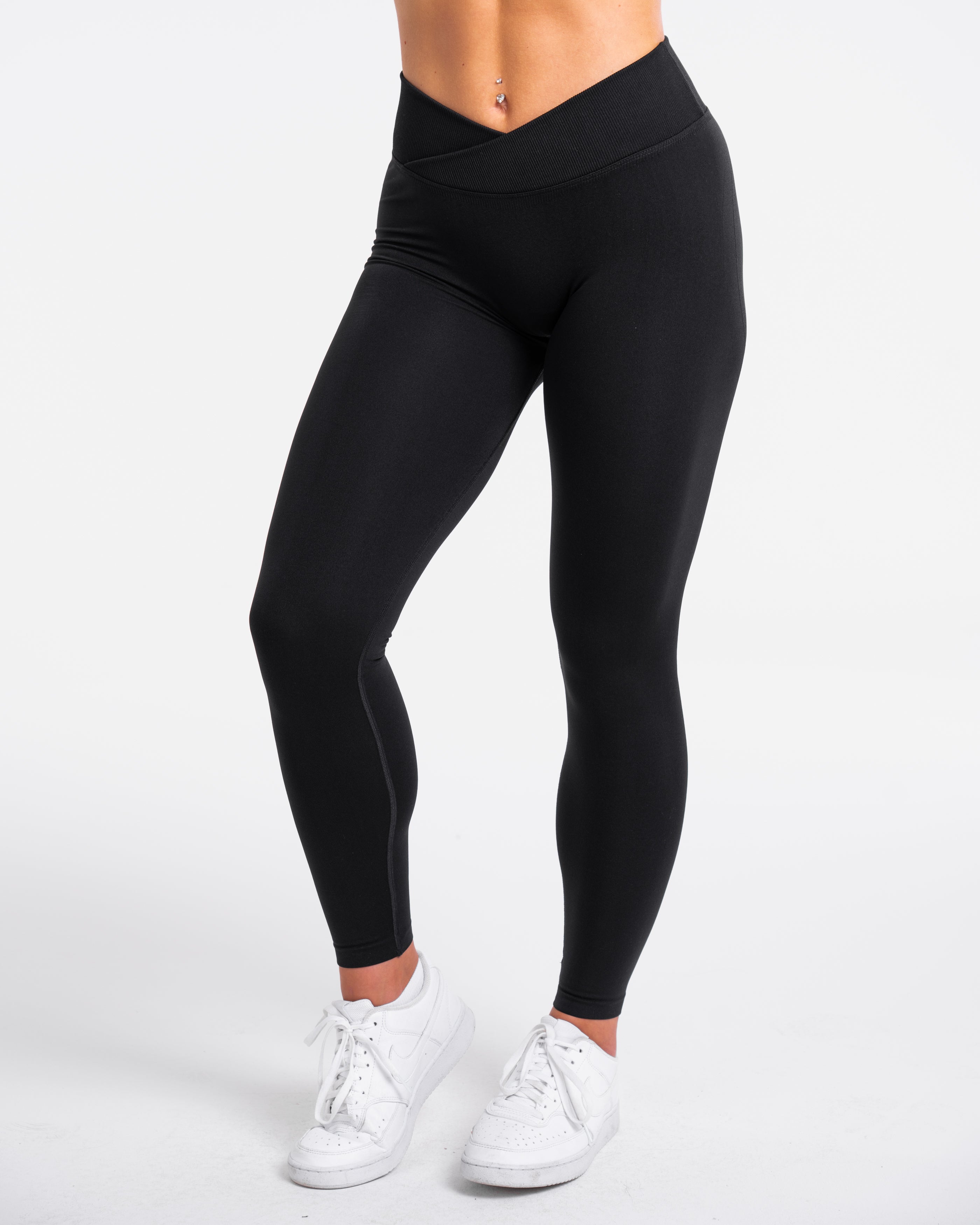
The simplest way to avoid a V shape is to choose leggings with no front center seam.
A center seam runs from the waistband down between the legs. It can draw fabric toward the crotch, especially when the leggings are tight. A smooth front panel removes one major source of pressure and definition.
When shopping, look for terms such as:
- Seamless front
- No front seam
- Smooth front panel
- Crossover front waistband
- Gusseted crotch
- Contour-free front
- Double-layer front panel
Check the product photos from the front, side, and back. Some leggings look seamless from a distance but still have a small seam near the crotch. Product descriptions can also use “seamless” to describe the knitting method while keeping a front seam.
The best design depends on your activity. For yoga, Pilates, and daily wear, a smooth front panel often gives the most comfortable result. For running or high-impact exercise, a gusset may matter more because it allows greater leg movement.

Select the Right Size and Rise
Sizing up can help when leggings are clearly too tight, but it is not always the best first step. A larger size may reduce the V shape while making the waistband loose or the legs baggy.
Use this fit check:
- Put on the leggings without pulling them excessively toward the waist.
- Stand in front of a mirror.
- Bend, squat, and take a few steps.
- Check whether the fabric pulls at the crotch.
- Check whether the waistband rolls or slides.
- Look for stretched, shiny areas across the front.
- Make sure the seams do not dig into your skin.
If the fabric looks shiny across the stomach, hips, or crotch, the leggings may be too small. If the waistband slides down but the legs fit well, the rise may be too short or the waistband may lack support.
High-rise leggings
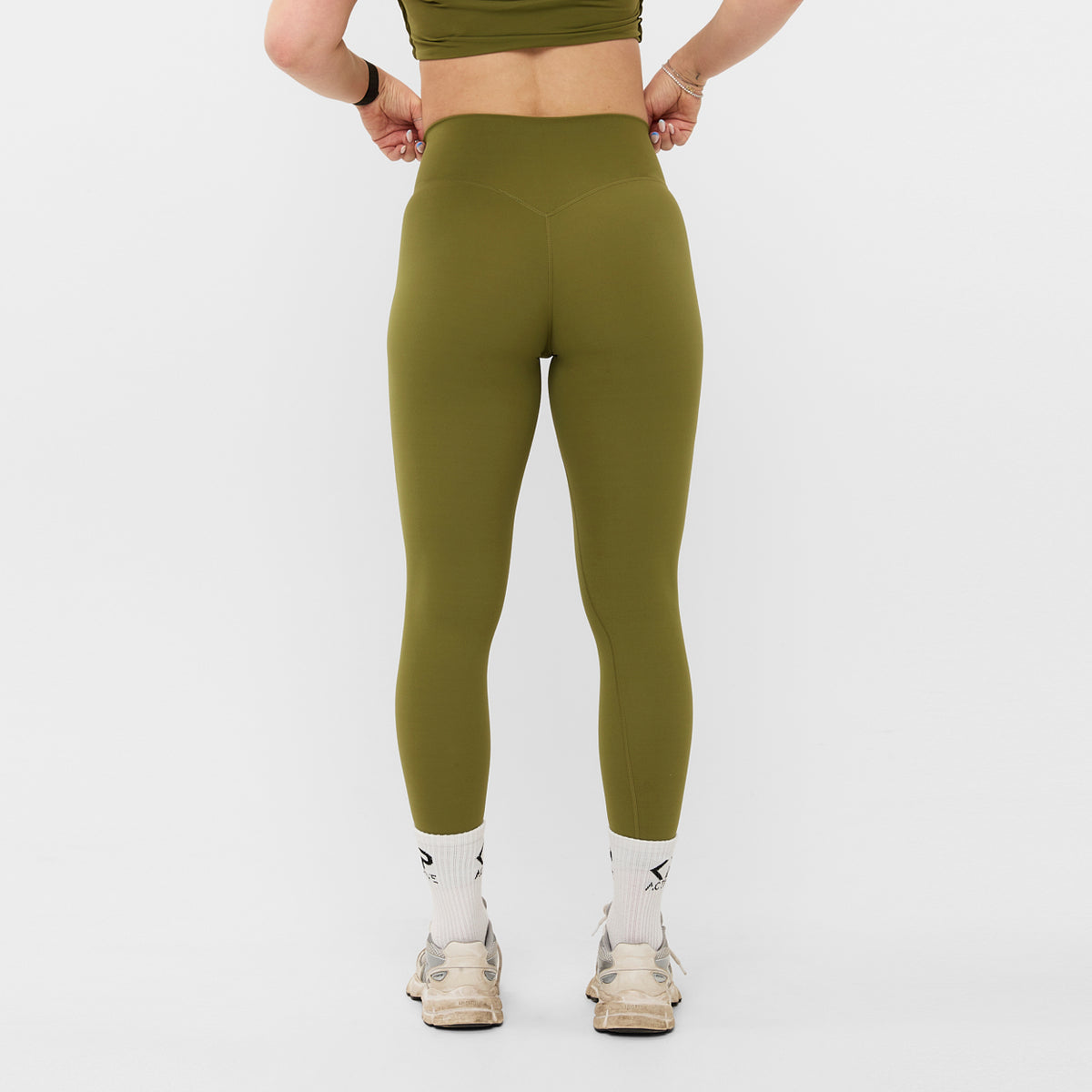
High-rise leggings can reduce front pulling because they cover more of the torso. However, high rise does not always mean better coverage. If the waistband is tight but the rise is short, it may increase pressure at the crotch.
Look for a high-rise design with:
- A long enough front rise
- A wide waistband
- Moderate compression
- A flat front
- Enough room through the hips
- No strong drawstring pressing into the front
The waistband should sit where the garment was designed to sit. Do not force leggings higher than their natural position. Pulling them high can shorten the space between the waistband and crotch seam.
When to size up
Consider the next size if:
- The fabric is shiny when you stand still
- The crotch seam feels tight
- The leggings pull down during movement
- You see strong horizontal stress lines
- The waistband presses into your stomach
- The front outline becomes worse when you squat
If the next size feels loose in the legs, try a different cut instead. A curvier or longer-rise style may fit better than a larger size.

Look for a Gusseted Crotch
A gusset can help prevent a V shape by spreading tension across a larger section of fabric. It also reduces the need for one seam to handle all the stress created by walking, squatting, and stretching.
Common gusset shapes include:
- Diamond gussets
- Triangle gussets
- Oval gussets
- Large multi-panel crotch inserts
A gusset is useful, but it is not a guarantee. If the gusset is too small, too far back, or paired with a short rise, the leggings may still pull forward.
To check the design, look at the inside of the leggings. A good gusset should provide a smooth transition between the inner legs. It should not create a hard ridge or sit directly against sensitive skin.
Gusseted leggings are often helpful for:
- Yoga
- Cycling
- Hiking
- Dance
- Weight training
- Long periods of walking
- Travel
For everyday use, a gusset can also reduce rubbing. That may make the leggings feel better even when the front appearance is not your main concern.
Choose Thicker, More Stable Fabric
Fabric affects how clearly seams and body contours show. Very thin fabric tends to stretch more around the crotch. It may also become more transparent when you bend or squat.
A thicker fabric can help, but thickness alone does not solve poor fit. The fabric must still have enough stretch and recovery.
Look for:
- Medium-to-heavy fabric weight
- Four-way stretch
- Good recovery after stretching
- A soft inner surface
- Double-layer construction
- Matte rather than highly shiny finish
Stretch recovery means the fabric returns to its original shape after being pulled. Leggings with poor recovery may become loose in some areas while still pulling tightly in others.
The fiber content can offer clues, but it does not tell the full story. Nylon-spandex and polyester-spandex blends can both work well. The knit structure, fabric weight, seam design, and pattern shape matter just as much.
Do not rely only on a high percentage of spandex. More stretch can sometimes make a V shape more visible if the garment is cut too small.
Use the squat test
Before buying or wearing leggings for a workout, try this simple test:
- Stand under bright light.
- Face a mirror.
- Squat slowly.
- Turn sideways.
- Check the front and back.
- Walk, sit, and raise one knee.
- Look for pulling, transparency, and seam movement.
The fabric should remain opaque in normal movement. If it becomes see-through or presses into the crotch, choose another size, cut, or fabric.

Wear Underwear That Does Not Create Extra Lines
Underwear can make a V shape more noticeable. Thick seams, narrow gussets, and bunching can push the leggings inward.
Options that may work better include:
- Seamless underwear
- Laser-cut briefs
- Full-coverage underwear with flat edges
- Moisture-wicking underwear for exercise
- Thong styles, if comfortable and suitable for you
No underwear style works for everyone. A thong may remove visible lines but can feel uncomfortable or cause irritation. Seamless full-coverage underwear may offer better comfort for daily wear.
Avoid underwear that:
- Bunches at the crotch
- Has thick elastic at the leg opening
- Feels too small
- Presses into the skin
- Holds moisture during exercise
For workouts, change out of damp clothing after exercise. Moisture and friction can contribute to irritation. If you develop ongoing itching, burning, pain, rash, or unusual discharge, stop using the item and speak with a qualified health professional.

Adjust How You Put On Leggings
The way you put on leggings can affect the front fit. Pulling the waistband sharply upward may drag the crotch seam into place.
Try this method:
- Step into the leggings.
- Pull the fabric up from the ankles.
- Work upward over the calves and thighs.
- Smooth the fabric over the hips.
- Set the crotch seam in a natural position.
- Place the waistband without over-pulling it.
- Walk and squat before making a final adjustment.
Do not yank only on the waistband. That can create extra tension at the center front.
If the leggings keep sliding down, do not repeatedly pull them higher. Sliding may indicate a short rise, weak waistband, or poor size match. A different cut will usually work better than constant adjustment.
Use Clothing Layers When You Need More Coverage
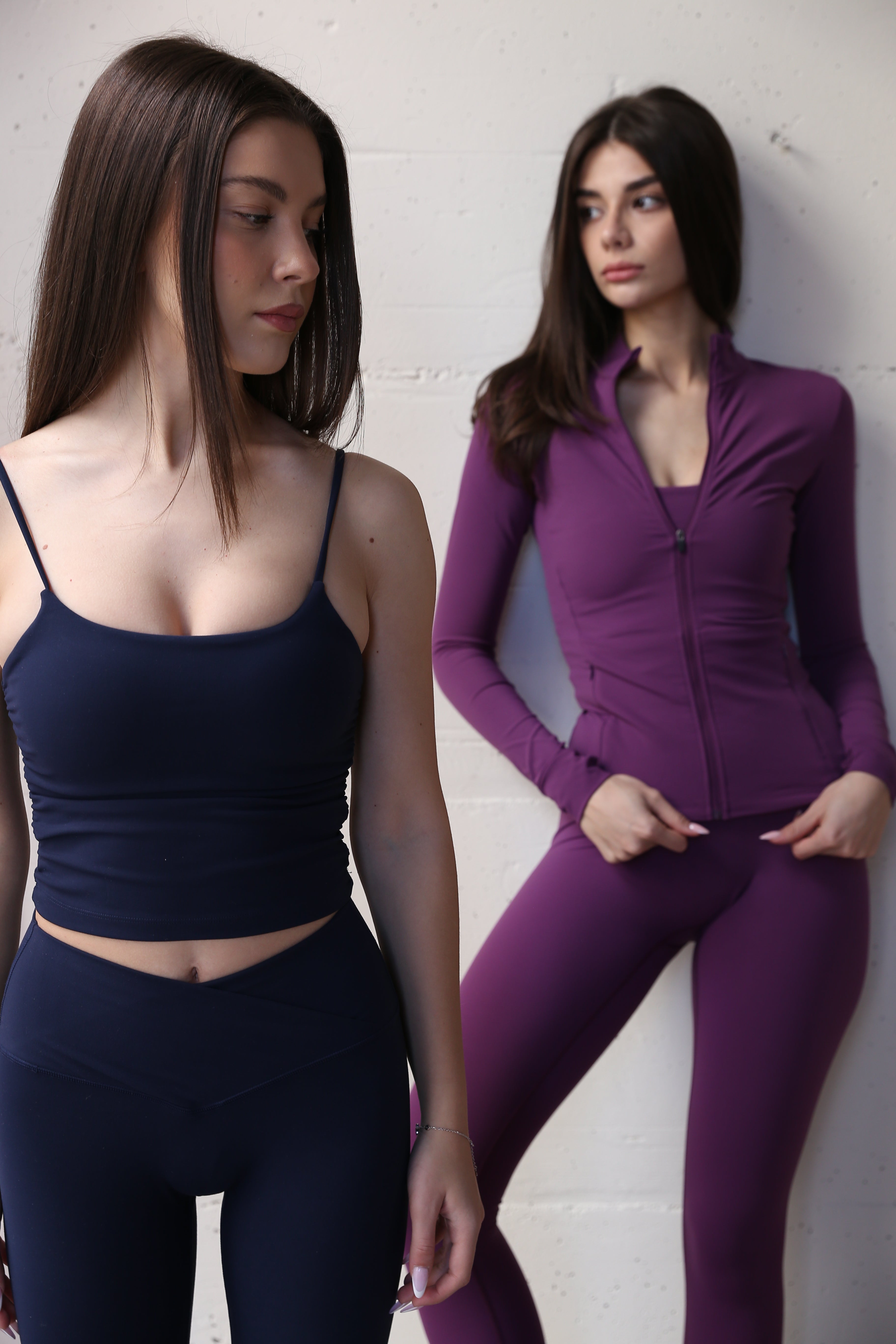
A long top, tunic, sweatshirt, or fitted jacket can provide extra coverage. This does not correct the fit, but it can help you feel more comfortable.
Useful options include:
- Longline sports bras
- Tunic-length workout tops
- Oversized sweatshirts
- Lightweight running jackets
- High-low tops
- Skirts or shorts worn over leggings
Choose a layer that does not restrict movement. For exercise, avoid very loose fabric around machines, pedals, or other equipment where it could catch.
Layering works best when the leggings already fit well. It should not be used to hide leggings that are painful, too tight, or transparent.
Quick Troubleshooting Table
The table below matches common signs with likely causes and practical fixes.
| What you notice | Likely cause | What to try |
|---|---|---|
| A sharp line points down from the waistband | Front center seam or short rise | Choose a smooth-front or longer-rise design |
| Fabric looks shiny at the crotch | Leggings are too small or overstretched | Try the next size or a roomier cut |
| The waistband slides down | Short rise or weak waistband | Try a longer rise or different waistband |
| The crotch feels tight when sitting | Insufficient front and back rise | Choose a gusseted style |
| The outline appears only with certain underwear | Thick seams or bunching | Try seamless or flat-seam underwear |
| The issue appears after washing | Fabric has lost recovery | Follow the care label and consider replacing the garment |
| The front is covered but the leggings feel painful | Poor construction or wrong size | Stop wearing them and choose a better-fitting pair |
| The V appears only when bending | Normal fabric tension or insufficient stretch | Try a larger size, gusset, or more stable fabric |
The key point is to fix the cause rather than keep pulling the garment into place. Repeated adjustment often makes the front seam more visible.
Common Mistakes to Avoid
Buying a smaller size for more compression
Smaller leggings do not always provide better support. They may create more pressure at the crotch, reduce coverage, and make the waistband roll.
Compression should feel firm but not painful. You should be able to breathe, sit, squat, and walk without numbness or sharp pressure.
Assuming high rise solves every problem
A high waistband cannot correct a short crotch or poor pattern. Check the full rise and crotch shape, not just the waistband height.
Choosing very thin fabric for maximum softness
Thin fabric can feel light and flexible, but it may show more seams and stretch marks. For front coverage, medium-weight fabric is often easier to manage.
Ignoring movement
Leggings can look fine while standing and pull badly during a squat. Always test the garment in the movements you plan to do.
Using unsafe alterations
Do not cut out a crotch seam while wearing the leggings. Do not cut a gusset without sewing knowledge. An altered seam may fail during movement and can create rough edges that irritate the skin.
If you want a permanent change, use a qualified tailor who understands stretch fabrics. Many standard alterations are designed for woven fabrics and may not work well on activewear.

How to Choose the Best Fix
Use this short decision guide:
- The leggings are tight everywhere: Try a larger size.
- The legs fit but the front is tight: Try a longer-rise or curvier cut.
- The front seam causes the outline: Choose a no-front-seam design.
- The fabric pulls during exercise: Look for a gusset.
- The issue comes from underwear: Try a smooth, flat-seam option.
- The leggings become transparent: Choose a thicker fabric or different size.
- The waistband slides: Look for a better rise or stronger waistband.
- The fit is comfortable but you want more coverage: Add a longer top or shorts.
Start with the smallest change that addresses the problem. If the garment is painful or visibly overstretched, replace it instead of trying to disguise the issue.
Frequently Asked Questions
Can you prevent a V shape in leggings without buying new ones?
Sometimes. Try repositioning the leggings without pulling them too high, changing underwear, or wearing a longer top. If the center seam is too close or the rise is too short, styling changes may not fully solve the issue.
Are seamless leggings better for avoiding a V shape?
They can be. A smooth front removes the center seam that often creates extra definition. However, seamless leggings can still show a V shape if they are too small, too thin, or worn too high.
Should you size up to avoid a V shape?
Size up if the leggings are tight, shiny, painful, or stretched across the crotch. If the legs already fit, try a longer-rise or different-shaped pair instead. Sizing up is not always the best answer.
Do seamless underwear styles prevent a V shape?
They may reduce visible underwear lines and bunching. They cannot correct a short rise, poor seam placement, or leggings that are too tight.
Is a V shape in leggings a sign that the leggings are see-through?
Not always. A V shape may result from seam placement or normal fabric tension. Use a bright-light squat test to check opacity. If you can see skin or underwear through the fabric, choose a thicker or better-fitting pair.
Conclusion
To avoid a V shape in leggings, start with the garment design. Choose a pair with a smooth front, enough rise, a well-placed gusset, and stable fabric. Then check the size, waistband position, and underwear.
A comfortable fit should stay in place during walking, sitting, squatting, and exercise. If the fabric pulls, shines, becomes transparent, or causes pain, change the size or cut rather than pulling the leggings higher.
The best next step is simple: inspect your current pair for a front seam, test the rise during movement, and decide whether the main issue is the seam, size, fabric, or underwear.