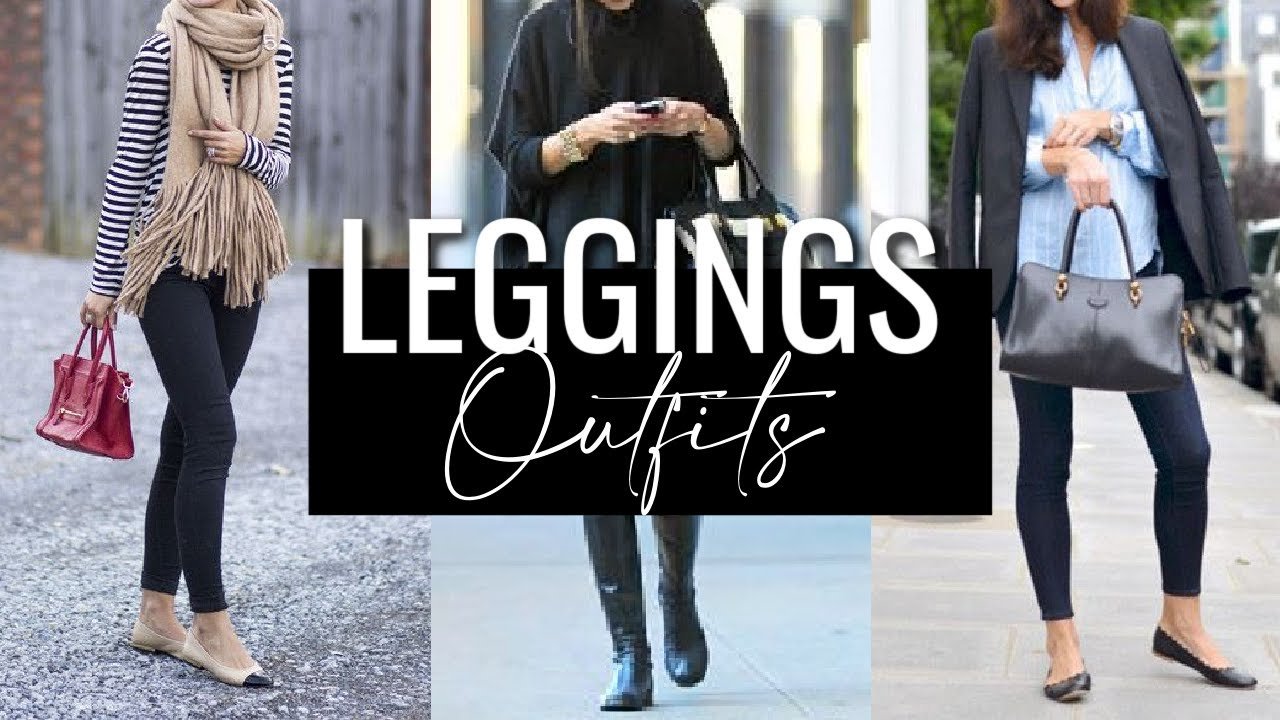
How To Look Good In Leggings: Style Tips
Leggings look best when they fit your body, suit the setting, and work with the rest of your outfit. In the United States, sizing can vary widely between brands, so do not rely on the size number alone. Check the size chart, test the stretch, and choose fabric that stays opaque when you bend or sit.
The most flattering outfit usually has three parts:
- Leggings with a smooth, secure fit
- A top layer with the right length and shape
- Shoes and accessories that match the occasion
Looking good in leggings is not about hiding your body. It is about creating balance, choosing quality fabric, and wearing each piece with ease.

Choose leggings that fit well
The right fit matters more than the brand, color, or trend. Leggings should feel close to the body without cutting into your waist, sliding down, or creating strong wrinkles at the knees.
Use these checks when trying on leggings:
- The waistband should stay in place when you walk, sit, and bend.
- The fabric should lie flat across the hips and thighs.
- The crotch should not sag or pull.
- The ankle opening should sit where the design intends.
- Seams should not dig into your skin.
- The material should remain opaque when stretched.
A good pair should feel like a smooth layer, not like shapewear. If you must keep pulling the waistband up, the rise or size may be wrong. If the fabric looks pale or shiny across the hips, the leggings may be too small or too thin.
Check the fabric before you buy
Fabric affects both appearance and comfort. Common options include:
| Fabric type | Best feature | Watch for |
|---|---|---|
| Nylon and elastane | Smooth feel and strong stretch | Can show shine under bright light |
| Polyester and elastane | Often durable and quick to dry | May feel less soft |
| Cotton blends | Soft, casual feel | May hold moisture during exercise |
| Ribbed fabric | Adds texture and visual interest | Can show more body detail |
| Brushed fabric | Warm and soft | May look more casual |
The fiber blend is only part of the answer. Fabric weight, knit quality, and construction also matter. A thick, double-layered waistband can create a cleaner line than a thin waistband, while a gusseted crotch can improve movement and reduce strain on seams.
Select the right rise
High-rise leggings sit near or above the natural waist. They can create a smooth base for a tucked shirt, cropped jacket, or fitted sweater.
Mid-rise leggings sit lower on the torso. They often work well with longer tops and casual layers.
The best rise depends on your torso length, comfort, and outfit. A high rise is not automatically more flattering. It may look awkward if the waistband bunches under a short top or presses into your ribs.

Use proportions to build a balanced outfit
Leggings are close-fitting, so the top layer changes the entire look. Balance does not mean covering your body. It means combining different lengths, volumes, and textures so the outfit has visual structure.
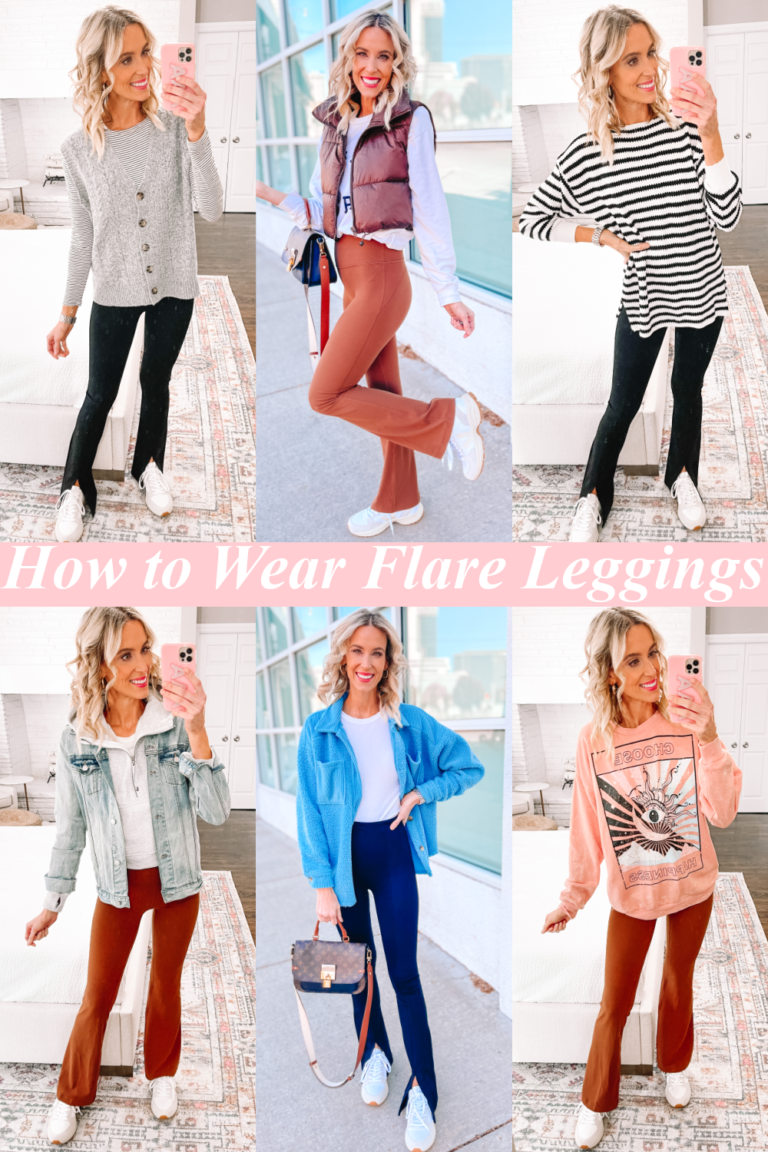
For a simple everyday outfit, try:
- Matte black leggings
- A relaxed white or gray T-shirt
- A denim jacket or open overshirt
- Clean sneakers
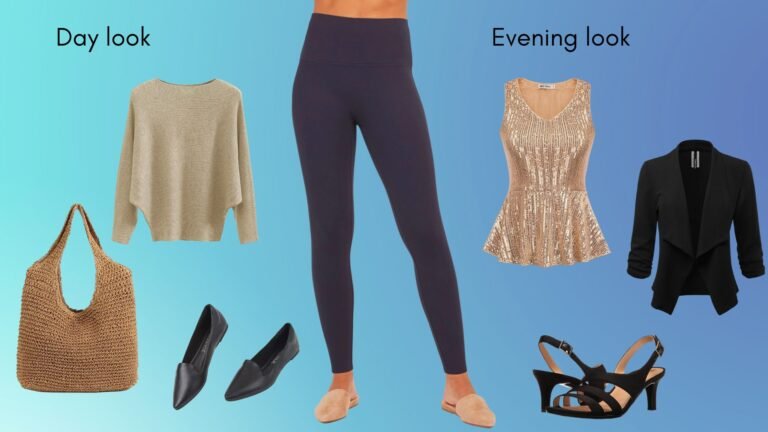
For a more polished look, try:
- Dark leggings with a smooth finish
- A long button-down shirt
- A structured blazer or neat cardigan
- Loafers, ankle boots, or simple flats
For cold weather, try:
- Fleece-lined leggings or thicker knit leggings
- A long sweater
- A wool coat, puffer coat, or quilted jacket
- Tall boots or weather-ready sneakers
Choose the top length based on the outfit
A top that ends at the waist or high hip creates a sporty, modern look. This works best when the leggings are opaque and the waistband sits smoothly.
A top that ends at the mid-hip gives more coverage and a relaxed shape. This is a useful choice for errands, travel, and casual work settings.
A tunic, long cardigan, or coat that reaches the upper thigh creates a longer line. Pair it with simple leggings and streamlined shoes so the outfit does not look crowded.
The key is to avoid accidental lengths. A shirt that ends at the widest part of the hips may make the outfit feel less balanced. If that happens, try a slightly shorter or longer layer.
Mix fitted and loose pieces
A fitted top with leggings creates a sleek silhouette. It can work for workouts, layered outfits, or dressier settings when the fabric and shoes support the look.
A loose top adds ease and contrast. Choose one with some structure, such as a crisp shirt, knit sweater, utility jacket, or tailored coat.
You can also layer two different shapes. For example, wear a fitted tank under an open oversized shirt. The open layer creates movement while the fitted base keeps the outfit from looking shapeless.

Pick colors that make outfits easy to wear
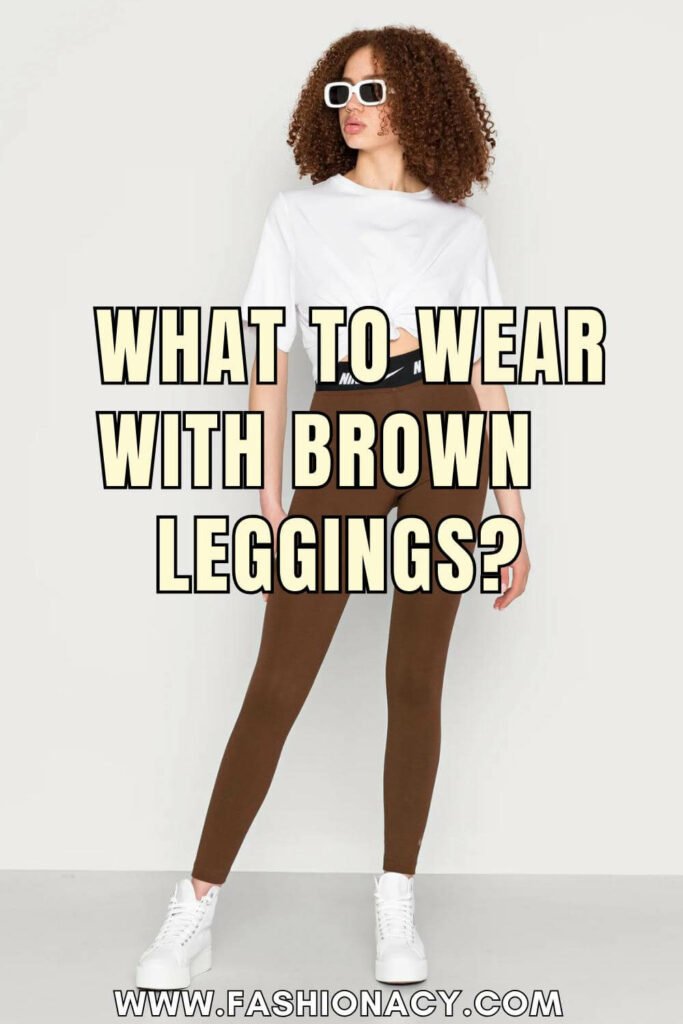
Black leggings are popular because they coordinate with many colors and patterns. However, dark navy, charcoal, brown, olive, and deep burgundy can also create a refined look.
Use color in one of three simple ways:
Keep the outfit monochrome
Wear similar shades from head to toe, such as black leggings with a charcoal sweater and black boots. This creates a long, quiet line.
The shades do not need to match exactly. Slight changes in texture can keep the outfit from looking flat.
Use one clear contrast
Pair dark leggings with a light top, such as cream, white, pale blue, or soft gray. Or pair light leggings with a dark jacket or sweater.
One strong contrast often looks more intentional than several competing colors.
Add one accent color
Keep the main outfit neutral, then add color with a jacket, bag, scarf, or shoes. Rust, red, cobalt, green, or pink can work as accents without taking over the outfit.
Bright leggings can also work, but they draw attention to the lower half of the outfit. Keep the rest of the look simple if you want the leggings to be the focus.
Understand matte and shiny finishes
Matte leggings tend to look more refined and are easy to dress up. Shiny leggings often look more athletic or bold.
A shiny finish can highlight wrinkles, stretched areas, and uneven color. If you want a smooth, understated look, choose a matte fabric with enough weight to hold its shape.

Make sure your leggings are opaque
Opacity is one of the most important quality checks. Leggings may look opaque in a fitting room but become more transparent when stretched, exposed to bright light, or viewed from behind.
Before wearing a new pair outside, test them at home:
- Put on the leggings with the underwear you plan to wear.
- Stand under bright indoor light.
- Bend, squat, and sit.
- Check the front, sides, and back in a full-length mirror.
- Ask a trusted person to check the back if needed.
A phone camera can also reveal changes in color or transparency, but lighting and camera settings can affect the result. Treat the test as a practical check, not a perfect measurement.
If the fabric becomes see-through, choose a larger size, a heavier material, or a different style. Do not assume the issue will disappear after washing.
Choose underwear carefully
Visible underwear lines can distract from an otherwise polished outfit. Consider:
- Seamless underwear
- Underwear in a shade close to your skin tone
- A thong, if comfortable for you
- Shorts or a slip layer under very thin leggings
Comfort comes first. Never wear an undergarment that causes pain, chafing, or unwanted pressure just to create a smoother appearance.

Choose shoes that match the setting
Shoes can change leggings from workout wear to casual clothing or a dressier outfit.
Sneakers
Clean sneakers create an easy athleisure look. Low-profile sneakers tend to look neat with cropped leggings, while larger running shoes create a more athletic appearance.
Ankle boots
Ankle boots add structure and work well with longer tops, sweaters, jackets, and coats. A similar color in the leggings and boots can create a smooth visual line.
Tall boots
Tall boots pair well with leggings because the slim leg fits inside the boot. Add a long sweater, coat, or knit dress for a practical cold-weather outfit.
Loafers and flats
Loafers can make leggings look more polished. Choose a structured top, such as a blazer, button-down shirt, or long cardigan, to support the dressier shoe.
Sandals
Simple sandals work with lightweight leggings and warm-weather layers. Avoid pairing heavy, winter-style leggings with delicate sandals unless the contrast is intentional.
The more athletic the leggings look, the more casual the shoes should usually be. To dress up leggings, start with a matte fabric, then add polished shoes and a structured layer.

Style leggings for different occasions
The setting should guide your fabric, top, shoes, and accessories.
For errands and casual days
Choose opaque leggings, a longer T-shirt or sweatshirt, a denim jacket, and sneakers. A crossbody bag can add shape and keep the outfit practical.
For travel
Select leggings with a comfortable waistband and fabric that does not require constant adjustment. Add a long cardigan, overshirt, or lightweight jacket.
For long trips, avoid clothing that feels tight at the waist or restricts movement. Comfort improves how you carry yourself, which often makes the outfit look better too.
For the office
Leggings are not suitable for every workplace. Check your employer’s dress policy first.
If they are allowed, choose thick, matte leggings that resemble slim trousers. Pair them with a long blazer, tunic blouse, sweater dress, or polished cardigan. Add loafers, ankle boots, or another structured shoe.
Avoid transparent fabric, visible athletic logos, very shiny finishes, and tops that look like gym wear.
For a workout
Use leggings designed for movement. Look for a secure waistband, breathable fabric, flat seams, and enough stretch for the activity.
Test the leggings through the movements you plan to do. Running, yoga, cycling, and strength training place different demands on fabric and seams.
For a night out
Choose dark matte leggings with a dressy top, tailored jacket, or long tunic. Add pointed flats, heeled boots, or sleek ankle boots.
Limit the number of statement pieces. If the leggings have shine or texture, keep the top and accessories more controlled.

Avoid common styling mistakes
Small details can make leggings look less polished. The most common problems are easy to fix.
Wearing fabric that is too thin
Thin leggings may show underwear, seams, or stretched areas. Replace them with a heavier fabric or wear them only under a longer layer.
Choosing the wrong size
A smaller size does not always create a more flattering look. Excess stretch can cause shine, pulling, and transparency.
A larger size is not always the answer either. If the waistband slides or the fabric gathers behind the knees, try a different cut or rise.
Ignoring the waistband
A waistband that folds, rolls, or digs in can affect the whole outfit. Try a wider waistband, a different rise, or a style with firmer support.
Mixing too many sporty details
Leggings, a performance shirt, a running jacket, and athletic shoes can look right at the gym. Outside the gym, the same combination may look unfinished.
Add one non-athletic piece, such as a denim jacket, wool coat, button-down shirt, or structured bag.
Wearing the wrong underwear color
White underwear can show through light leggings. Dark underwear can also create contrast under pale or thin fabric.
Test the complete outfit in the same lighting where you plan to wear it.
Forgetting garment care
Follow the care label. Heat can damage elastic fibers over time, and fabric softener may affect the performance of some technical fabrics.
Wash leggings after sweaty workouts. For everyday wear, use your judgment based on sweat, odor, and contact with skin. Let leggings dry fully before storing them.

Use this quick outfit formula
When you are unsure what to wear, use this five-step method:
- Start with the setting. Decide whether the outfit is for exercise, errands, work, travel, or an evening out.
- Choose the leggings. Match the fabric weight, color, and finish to that setting.
- Add a top with a different shape. Pair fitted leggings with a relaxed, structured, or longer top.
- Choose shoes that support the look. Sneakers keep the outfit casual; boots, loafers, and polished flats make it more refined.
- Add one finishing layer. Use a jacket, cardigan, coat, scarf, belt bag, or structured purse.
If the outfit feels too tight, add length or volume on top. If it feels too loose, add structure through the jacket, shoes, or bag. If it feels too plain, use one color or texture as an accent.
Signs that the outfit works
Your leggings outfit is likely successful when:
- You can move without adjusting the waistband.
- The fabric stays opaque in normal lighting.
- The top and leggings create a clear shape.
- The shoes fit the setting.
- You feel comfortable standing, sitting, and walking.
- No single detail competes with the entire outfit.
Style is not a test with one correct answer. These checks help you make a choice that looks deliberate and feels like you.

Key takeaways
- Fit and opacity matter more than the label size.
- Choose a rise and waistband that stay comfortable during movement.
- Balance close-fitting leggings with a top or layer of a different shape.
- Matte, thicker fabrics are usually easier to dress up.
- Use shoes to set the level of formality.
- Test new leggings under bright light before wearing them out.
- Do not sacrifice comfort for a smoother appearance.
FAQs
Should leggings be tight or loose?
Leggings should fit close to the body without cutting into your waist or becoming transparent. If the fabric pulls strongly, shines across the hips, or slides down, try a different size, rise, or fabric.
What tops look best with leggings?
Long T-shirts, button-down shirts, tunics, sweaters, cardigans, denim jackets, and blazers all work well. Choose the top based on the setting and balance the fitted leg with a relaxed or structured layer.
Can you wear leggings to work?
That depends on your workplace dress code. If leggings are allowed, choose a thick, matte style and pair it with a polished long top, blazer, cardigan, or sweater dress. Athletic or transparent leggings are usually less suitable for professional settings.
What shoes should you wear with leggings?
Sneakers work for casual and athletic outfits. Ankle boots, tall boots, loafers, and polished flats can create a more refined look. Match the shoe to the fabric and formality of the rest of the outfit.
How can you make leggings look less casual?
Choose matte leggings, add a structured blazer or long coat, and wear loafers, ankle boots, or sleek flats. Keep logos and athletic details limited.
How do you stop leggings from showing underwear lines?
Try seamless underwear, a compatible skin-tone shade, or a smoothing layer if it feels comfortable. You can also choose thicker leggings or wear a longer top that covers the area.
Conclusion
To look good in leggings, focus on fit, fabric, proportion, and purpose. Choose leggings that stay opaque and comfortable, then build the outfit with a top layer and shoes that suit the setting.
Start with one reliable pair in a matte, neutral fabric. Test it in motion, pair it with a longer or structured top, and add shoes that match the occasion. Once that base works, experiment with color, texture, jackets, and accessories.